
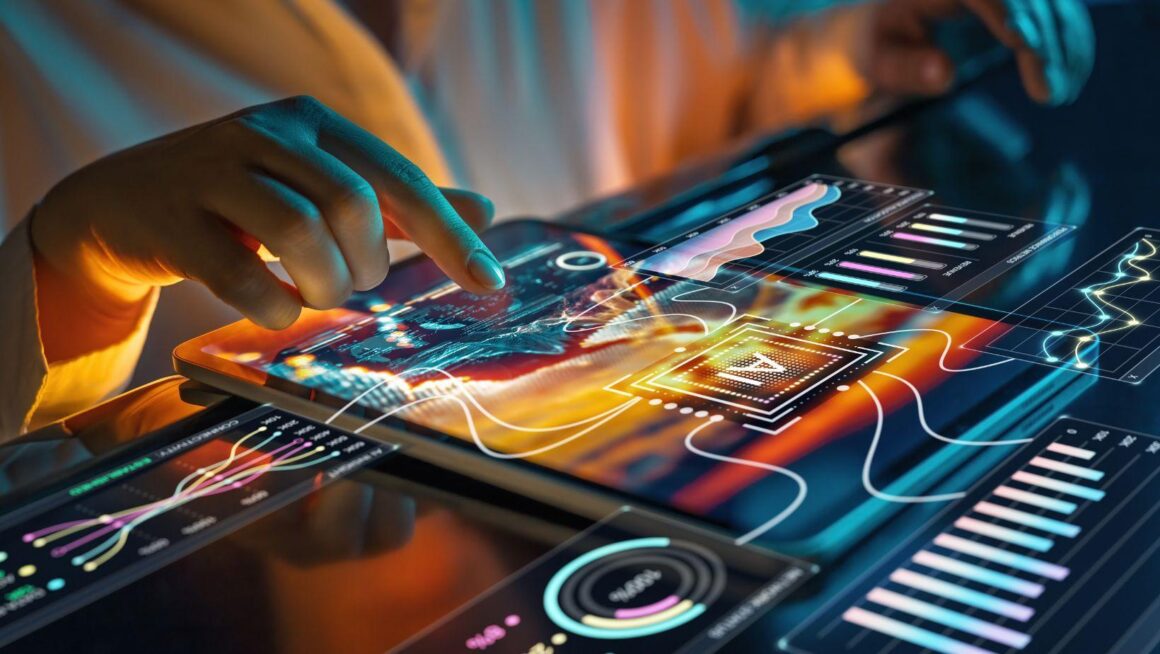
Touchscreen technology has become so integrated into everyday life that it is easy to overlook how transformative it has been. Today, billions of people interact with gaming devices, computers, tablets, and smartphones through simple taps and swipes. Whether playing games, browsing the web, creating digital artwork, or managing online services, touchscreens have fundamentally changed the relationship between humans and technology.
The journey from early experimental touch displays to the highly responsive screens found in modern devices spans decades of innovation. Along the way, touchscreen technology has reshaped digital gaming, personal computing, and mobile entertainment, creating entirely new experiences for users around the world.
The Beginnings of Touchscreen Technology
Touchscreen development began in research environments during the 1960s and 1970s. Early systems were primarily designed for specialist applications, including industrial controls and academic projects. While innovative for their time, these displays lacked the responsiveness and reliability needed for widespread consumer adoption.
During the 1980s and 1990s, touchscreen technology gradually appeared in commercial products. Information kiosks, retail terminals, ticket machines, and certain enterprise computing systems began incorporating touch-sensitive displays. Most of these devices relied on resistive touchscreen technology, requiring physical pressure from a finger or stylus to register input.
Although these systems were functional, they were still a long way from the fluid touchscreen experiences users enjoy today.
The Arrival of Touchscreens in Gaming
Gaming was one of the industries that benefited significantly from improvements in touchscreen technology.
As handheld gaming devices evolved, manufacturers began experimenting with touch-based controls. This gave developers new ways to design games that encouraged direct interaction rather than relying exclusively on buttons and directional controls.
Puzzle games, educational software, strategy titles, and simulation experiences were particularly well suited to touch interactions. Players could move pieces, select commands, and navigate interfaces simply by touching the screen.
This development marked an important turning point because it showed that touchscreens could enhance gameplay rather than serve merely as a novelty feature.
Smartphones Spark a Revolution
The widespread adoption of smartphones transformed the touchscreen industry more dramatically than any previous innovation.
Capacitive touchscreens introduced greater accuracy, responsiveness, and support for gestures such as pinching, zooming, and swiping. Unlike older resistive systems, users no longer needed to apply pressure to interact with a display.
The smartphone era also created the modern mobile gaming market. Developers built games specifically around touchscreen controls, introducing gameplay styles that would have been difficult or impossible on traditional gaming platforms.
Genres such as puzzle games, card games, strategy titles, simulation experiences, role-playing games, and countless casual games flourished. Millions of consumers who had never owned dedicated gaming hardware suddenly had access to games directly from their mobile devices.
This shift permanently altered the gaming landscape and established touchscreens as a primary method of digital interaction.
Online Services Adapt to Touchscreen Audiences
As touchscreen devices became increasingly common, software developers and online service providers adapted their platforms accordingly.
This included streaming services, social media applications, e-commerce platforms, and online gaming products. Mobile-first design became an industry standard as organizations recognized that many users would primarily access their services through touchscreen devices.
For example, lottery applications and entertainment platforms such as JackPocket Lottery were designed with touch-based navigation in mind, allowing users to browse options, manage accounts, and access services through intuitive mobile interfaces.
The convenience of touchscreen interaction helped broaden the appeal of many digital services beyond their traditional audiences.
Tablets Expand Possibilities
When modern tablets entered the market, they created a middle ground between smartphones and personal computers.
The larger screens allowed developers to create richer experiences while still retaining the simplicity of touch controls. Users could enjoy games, watch videos, read books, create artwork, and manage work-related tasks from a single device.
Tablets quickly found applications in education, healthcare, business, and entertainment. For gamers, the larger displays provided greater immersion and more comfortable controls. Strategy games, simulation titles, and creative applications particularly benefited from the additional screen space.
The success of tablets further demonstrated that touchscreens could serve as primary interfaces for a wide range of activities.
Touchscreens Enter Personal Computing
For decades, keyboards and mice dominated personal computing. As touchscreen technology matured, manufacturers began integrating touch displays into laptops and desktop computers.
This resulted in a new generation of hybrid devices that combined traditional computing features with tablet-style functionality. Users could type with a keyboard when necessary while also interacting directly with content on the screen.
Touch-enabled computers proved especially useful in education, creative industries, and business environments. Designers could sketch directly onto displays, students could annotate documents more naturally, and professionals gained new ways to interact with presentations and applications.
Although keyboards and mice remain essential for many tasks, touchscreens have become a valuable addition to the modern computing experience.
Improvements in Gaming Hardware
Gaming hardware manufacturers have continued refining touchscreen technology over the years.
Modern handheld gaming systems feature responsive, high-resolution displays capable of supporting multiple simultaneous touch inputs. Touchscreens often complement traditional controls by enhancing menus, inventories, maps, and customization systems.
Cloud gaming has also expanded the role of touchscreens. Players can now access sophisticated games across tablets and smartphones, allowing experiences once limited to dedicated consoles or PCs to be enjoyed on portable touchscreen devices.
As processing power continues to improve, touchscreen gaming hardware is becoming increasingly capable of delivering advanced graphical experiences.
Advances in Display Technology
The quality of touchscreen displays has improved dramatically over time. Modern devices offer sharper resolutions, brighter screens, richer colours, faster refresh rates, and significantly improved durability compared with earlier generations. Multi-touch support has become standard, while software optimisations have reduced input lag and improved overall responsiveness.
Advances in materials and manufacturing have also produced stronger glass surfaces and more reliable displays capable of withstanding years of regular use. These improvements have enhanced both productivity and entertainment experiences across a wide range of devices.
The Future of Touchscreens
Touchscreen technology continues to evolve rapidly.
Flexible displays, foldable devices, advanced stylus support, and haptic feedback systems are already introducing new possibilities. Researchers are also exploring ways to simulate physical textures and sensations on glass surfaces, potentially making touchscreen interactions feel even more natural.
Artificial intelligence is expected to play a growing role as well, allowing interfaces to adapt dynamically to individual user preferences and behaviour patterns.
For both gamers and general consumers, these innovations could make future devices more immersive, intuitive, and responsive than ever before.
A Look Ahead
The evolution of touchscreen technology has transformed digital gaming devices, computers, and tablets from niche products into everyday essentials. What began as a relatively simple input method has become the foundation of modern digital interaction.
From handheld gaming systems and smartphones to tablets and touch-enabled PCs, touchscreens have made technology more accessible, intuitive, and versatile. Modern displays now offer sharper visuals, faster response times, improved durability, greater accuracy, and support for multiple simultaneous touch inputs, creating a smoother experience for both gaming and productivity. Advances in screen technology have also reduced input lag while making devices more reliable for everyday use.
As new innovations continue to emerge, including foldable displays, enhanced haptic feedback, and more intelligent user interfaces, touchscreen technology is likely to remain at the center of digital experiences for years to come. Whether people are playing games, working remotely, learning new skills, or accessing digital entertainment, touchscreens will continue shaping how individuals interact with technology in an increasingly connected world.