
If you’ve ever searched for a way to get your product data under control, you’ve probably run into two acronyms: PIM and MDM. They sound similar. They both involve “data management.” And if you ask five different vendors which one you need, you’ll get five different answers — each one suspiciously aligned with whatever they’re selling.
So let’s cut through it. Understanding what is a pim and how it differs from MDM comes down to one question: what kind of data are you trying to manage, and who needs to use it? The answer to that question will tell you more than any feature comparison chart.
What Is MDM? Master Data Management Explained
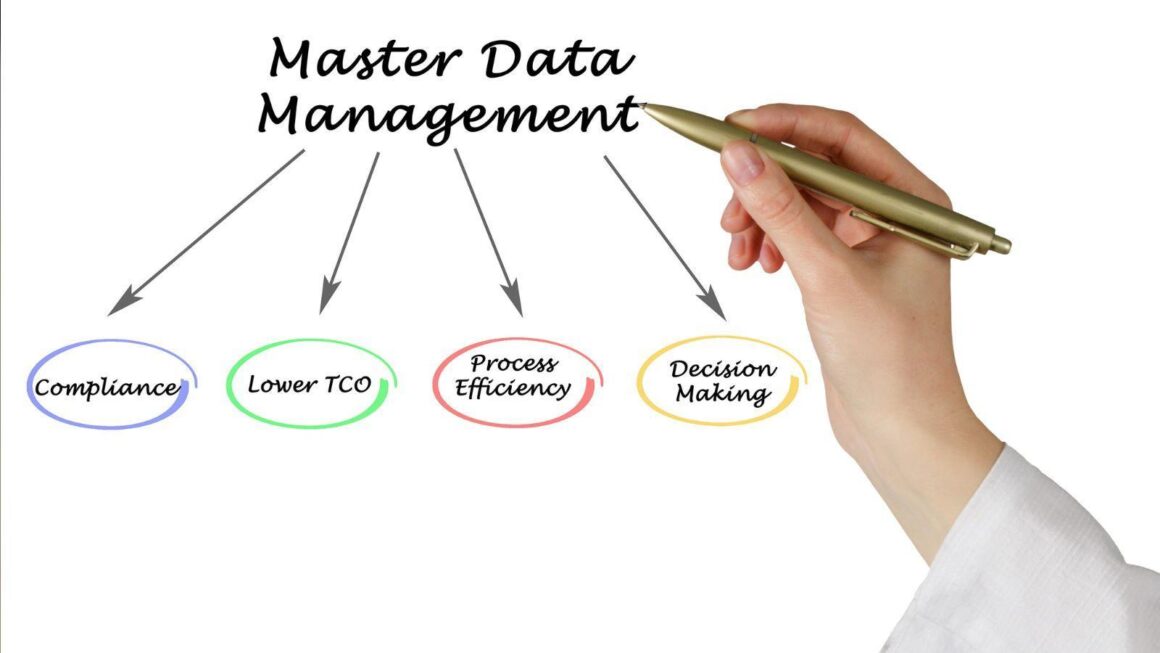
Master Data Management (MDM) is an enterprise-level approach to managing the core data that a business runs on — across every system, department, and process. It’s broad by design.
MDM typically covers:
- Customer data — names, contacts, account histories, segmentation
- Supplier and vendor data — contracts, pricing, compliance records
- Employee data — roles, locations, HR records
- Financial data — cost centers, accounts, reporting hierarchies
- Product data — basic records, SKUs, classifications
That last item is important. MDM does include product data — but as one domain among many. It treats product information the way a general contractor treats plumbing: it needs to exist, it needs to be correct, but it’s not the specialty.
MDM is primarily an IT and data governance discipline. Its goal is a single, consistent version of business-critical data across ERP, CRM, supply chain systems, and enterprise resource planning platforms — so that finance, operations, and logistics are all working from the same foundation.
What Is PIM? And Where MDM Ends, PIM Begins
Product Information Management is a purpose-built system for managing the product content that drives commerce — descriptions, images, specifications, variants, channel-specific attributes, translations, and everything else a customer or sales channel needs to understand and buy a product.
Where MDM is broad, PIM is deep. It doesn’t try to manage your customer records or your supplier contracts. It manages one thing — product information — at the level of detail that eCommerce, retail, and multichannel distribution actually require.
A PIM system handles:
- Rich product descriptions and marketing copy
- Technical specifications and dimensional data
- Fabric, finish, and material variants
- Digital assets — images, videos, 3D renders, spec sheets
- Channel-specific content (Shopify, Google Shopping, B2B portals)
- Multilingual product catalogs
- Product completeness scoring before publication
- Assembly instructions and compliance documentation
The difference in depth is significant. An MDM system might store “sofa — SKU 00421 — fabric: velvet — color: blue.” A PIM system stores the SKU, the full product description, five lifestyle images, the Pantone color reference, the seat height, the care instructions, the French translation, and a completeness check confirming all required fields for Wayfair are filled before the listing goes live.
Key Takeaway: MDM knows your product exists. PIM knows everything a customer needs to buy it.
PIM vs MDM: The Core Differences
|
|
PIM |
MDM |
|
Primary focus |
Product content for commerce |
All master data across the enterprise |
|
Who uses it |
Marketing, eCommerce, content teams |
IT, data governance, operations |
|
Data types |
Descriptions, images, specs, variants, translations |
Customers, suppliers, products, employees, financials |
|
Primary output |
Published product listings across channels |
Clean, consistent data across internal systems |
|
Depth on product data |
Very deep |
Shallow — one domain among many |
|
Channel publishing |
Built in |
Not a native function |
|
Time to market |
Direct impact |
Indirect impact |
|
Typical buyer |
eCommerce manager, CMO |
CIO, CDO, IT director |
Where PIM and MDM Overlap — And Where They Don’t
The overlap sits in basic product data: SKUs, product classifications, basic attributes, supplier linkages. Both systems want this data to be accurate. Both systems suffer when it isn’t.
The difference is what happens next.
In an MDM system, accurate product data flows into ERP, supply chain, and financial reporting. It ensures that operations, logistics, and finance are working from consistent records. This matters enormously for large enterprises managing thousands of suppliers, complex procurement, and regulatory data governance requirements.
In a PIM system, accurate product data gets enriched, formatted, translated, and published. It ensures that customers, marketplaces, and retail partners see complete, consistent, compelling product information. This matters for any business selling products — regardless of size.
The practical rule: MDM solves an internal data consistency problem. PIM solves a commercial content distribution problem.
When Your Business Needs a PIM
Consider a PIM system when:
Your catalog is growing faster than your team can manage it. If adding 100 new products means weeks of manual work — formatting descriptions, preparing channel exports, handling variant structures — a PIM is the tool that absorbs that work.
You sell through multiple channels simultaneously. DTC website, Amazon, Google Shopping, a B2B distributor portal, a retail partner feed — each channel has different data requirements. A PIM maps your attributes to each channel’s format once and publishes automatically.
Product data quality is hurting your sales. Wrong dimensions, outdated descriptions, missing images, incomplete listings — these errors cost conversions. A PIM’s completeness scoring feature catches them before they go live.
Your team spends more time on data than on content. When product managers are reformatting spreadsheets instead of improving product stories, the infrastructure has become the bottleneck.
You operate in multiple languages. A PIM centralizes your master content and manages translations by channel and region — without maintaining separate files per market.
When Your Business Needs MDM
MDM is the right tool when:
You’re a large enterprise with data spread across dozens of systems. ERP, CRM, procurement, logistics, HR — when each system has its own version of core business data and reconciling them is a full-time job, MDM provides the governance layer.
Data governance and compliance are regulatory requirements. In industries like pharmaceuticals, financial services, or manufacturing, data accuracy across systems isn’t just operational — it’s regulated. MDM provides the audit trails, governance workflows, and data quality controls that compliance requires.
You’re managing complex supplier and customer master data. If your business has thousands of vendors, customers, and procurement relationships that need to stay synchronized across enterprise systems, MDM is built for that scale and complexity.
Your IT infrastructure requires a single source of truth for all data domains. Not just products — everything. MDM is an enterprise infrastructure investment, not a departmental tool.
When You Need Both — And How They Work Together
For large enterprises, PIM and MDM are not competitors. They’re complementary layers of the same data architecture.
MDM manages the foundational product record: the SKU, the classification, the supplier reference, the basic attributes. It ensures this data is accurate and consistent across ERP and supply chain systems.
PIM takes that foundation and builds the commercial layer on top: the descriptions, the images, the variants, the channel-specific formatting, the translations. It takes what MDM knows about a product and turns it into what a customer needs to see.
In this architecture, MDM feeds PIM. New product records created in MDM — or in ERP, which MDM governs — flow automatically into PIM for enrichment and publication. Changes to core attributes update in MDM and propagate downstream.
The integration between the two systems is where data quality compounds: clean master data in MDM means richer, more accurate content in PIM — which means better product listings, fewer returns, and faster time to market.
The Most Common Mistake: Buying MDM When You Need PIM
This happens more often than it should. A business recognizes it has a product data problem — inconsistent listings, channel errors, slow launches — and decides it needs an enterprise data solution. MDM gets evaluated. MDM gets purchased. MDM gets implemented over 18 months and several hundred thousand dollars.
And then the eCommerce team still can’t publish to Shopify without manually formatting a spreadsheet.
MDM was never designed to solve the commercial content problem. It was designed to solve the enterprise data consistency problem. For businesses whose primary pain is product listings, channel distribution, and catalog management, PIM delivers results in weeks. MDM delivers them eventually — if the integration to commerce systems ever gets built.
PIM vs MDM: Questions to Ask Before Deciding
Before choosing between pim vs mdm solutions in commerce, answer these:
Who has the data problem? If it’s marketing, eCommerce, and content teams — PIM. If it’s IT, data governance, and operations across the enterprise — MDM.
What’s the output? If you need product listings published to sales channels — PIM. If you need consistent data records across internal systems — MDM.
What’s your timeline? PIM implementations typically measure in weeks to a few months. MDM implementations measure in quarters to years.
What’s your catalog size and complexity? PIM is designed for rich product catalogs with variants, assets, and channel requirements. MDM handles product data as one domain among many, without deep commerce-specific functionality.
Do you sell through multiple channels today — or plan to? If yes, PIM is the right starting point. MDM doesn’t publish to Shopify, Google Shopping, or a B2B portal — PIM does.
Which One Does Your Business Actually Need?
For most eCommerce brands, retailers, and multichannel distributors: start with PIM. It solves the problem you feel most acutely — inconsistent product content, slow launches, manual channel work — and delivers measurable results without an enterprise-scale implementation.
For large enterprises managing complex data governance across multiple systems and domains: MDM addresses the infrastructure layer that PIM builds on. If you have an MDM in place, adding a PIM completes the architecture by handling the commercial output layer.
If you’re not sure which applies to your business, the simplest test: open your product catalog and ask whether the problem is that your data is inconsistent internally or that it’s incomplete and hard to publish externally. The first is an MDM problem. The second is a PIM problem.
Most growing eCommerce businesses have the second problem.