

We used to think about aging as this slow, inevitable rust. Like an old car sitting in a driveway; eventually, the paint peels and the engine just stops turning over. But the conversation has shifted. It’s not just about “getting old” anymore. We are looking at the molecular machinery. We are looking at how the body communicates with itself.
Biotechnology has moved into a space where we aren’t just reacting to wrinkles or tired joints. We are trying to talk back to the cells. This is where synthetic peptides enter the frame. They aren’t some magic potion found in a jungle. They are precise, engineered strings of amino acids. Think of them as software updates for your biological hardware. They tell your skin to produce more of the good stuff. They tell your muscles to recover faster. It is a targeted approach that makes traditional creams look like they are operating in the stone age.
The Molecular Handshake
Peptides are essentially short chains of amino acids. They act as signaling molecules. When you have a chain that is short enough, it can actually get where it needs to go. It finds a receptor on a cell. It clicks into place like a key. And then? The cell starts doing a specific job.
- Collagen production: This is the big one for most people. Your body stops making as much as you hit your thirties. Peptides send a “false” signal that collagen has been destroyed, which tricks the body into making more.
- Inflammation control: Chronic inflammation is the quiet killer of longevity. Certain synthetic sequences help dampen that fire.
- Barriers and protection: Strengthening the outermost layer of the skin is vital for keeping hydration in and toxins out.
It is a fascinating bit of mimicry. We are taking the body’s own language and refining it. We are making it louder. We are making it clearer. The goal is simple; keep the system running like it did ten years ago.
The Shift From Nature to the Lab
There is a lot of talk about “natural” ingredients. People love the idea of botanical extracts. But nature is messy. It’s inconsistent. If you want a specific biological result, you need consistency. This is why synthetic peptides are winning the race in modern anti-aging science.
When scientists create these in a lab, they are removing the fluff. They are isolating the exact sequence that triggers a result. You don’t want the whole plant; you want the specific message the plant sends. Synthetic versions are more stable. They last longer on the shelf. More importantly, they last longer once they hit your system.
It’s about bio-availability. A lot of things look good on paper but fail the moment they touch human skin or enter the bloodstream. They break down. They get lost. The synthetic revolution is about making sure the message actually gets delivered to the recipient.
Precision Engineering in Skincare
We have to look at how these advancements actually change the daily routine. Most people are tired of products that feel like they are just sitting on top of the skin. They want something that actually integrates. They want a solution that addresses the thinning of the dermis and the loss of elasticity at a foundational level. Modern science has allowed for the development of anti-aging skincare peptides that don’t just sit there: they actually participate in the biological process of repair. By focusing on these specific chains, we can target the structural integrity of the face and neck. It is about more than just moisture; it is about rebuilding the scaffold that holds everything up. This level of intervention was impossible twenty years ago. Now, it is becoming the standard for anyone serious about longevity.
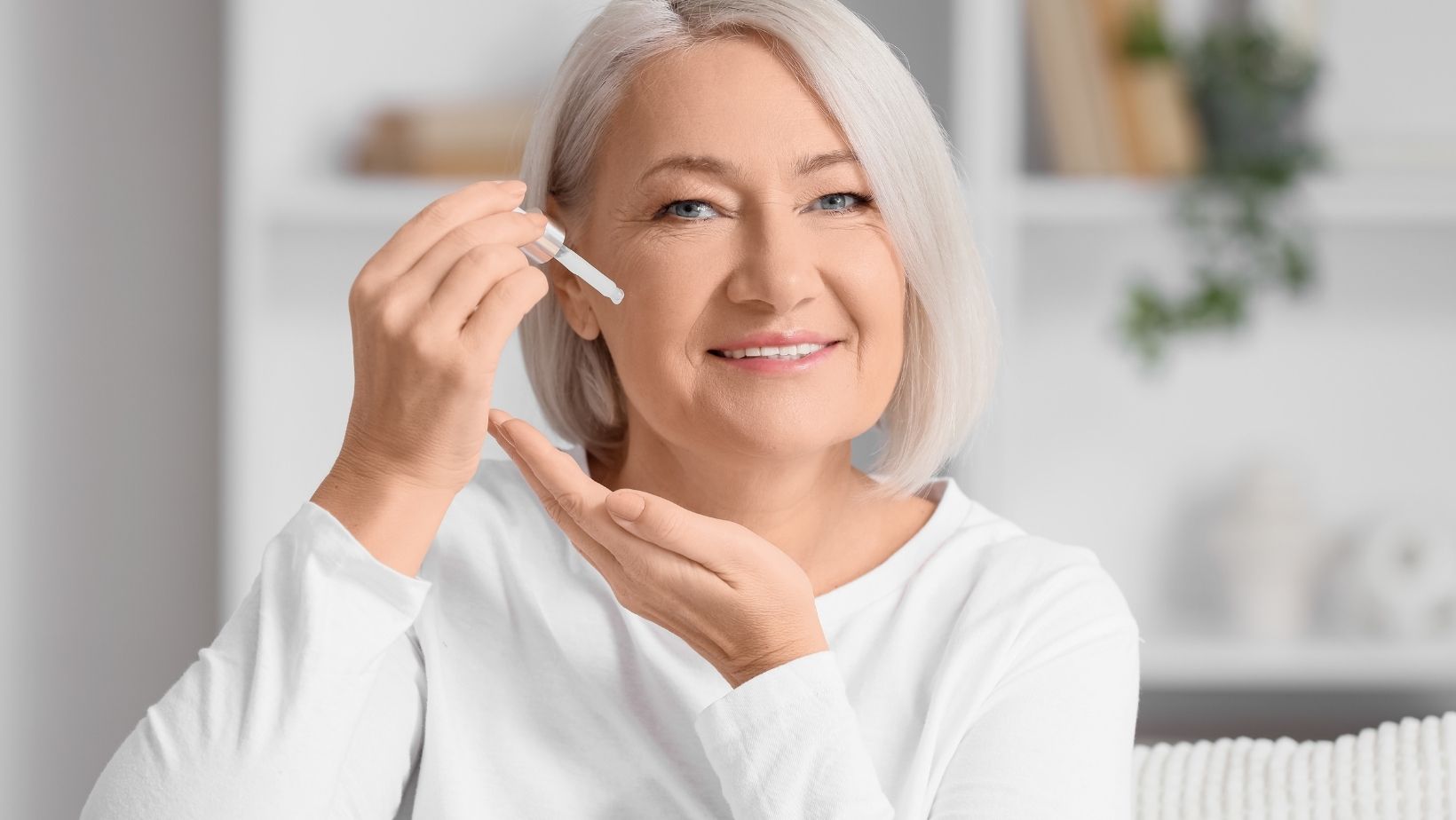
The beauty of this is the lack of “scattergun” logic. We aren’t just throwing ingredients at a problem and hoping something sticks. We are being surgical. If the goal is to reduce the depth of a specific line, there is a peptide for that. If the goal is to brighten the tone, there is a sequence for that too.
Breaking Down the Longevity Myth
Longevity isn’t about living to 150. At least, not for most of us. It is about healthspan. It is about making sure that the years we do have are high quality. We want to move well. We want our skin to reflect our internal health.
Synthetic peptides are bridges. They bridge the gap between “beauty products” and “medical science.” The line is blurring. We are seeing more crossover between what happens in a longevity clinic and what you find on a high-end vanity.
- Customization: We are moving toward a world where your peptide blend might be unique to your DNA.
- Synergy: These molecules don’t work in a vacuum. They play well with others, like Vitamin C or Retinoids.
- Safety: Because they are based on human biology, the risk of weird reactions is often lower than with harsh synthetic chemicals.
The data is starting to back up the hype. We aren’t just looking at anecdotal evidence from influencers. We are looking at clinical trials. We are looking at skin biopsies that show actual densification of the tissue. It is a measurable change.
The Role of Cellular Communication
Why do we age? It’s a big question. Part of it is “cellular senescence.” These are cells that stop dividing but don’t die. They just sit there. They leak inflammatory signals. They gum up the works.
Some of the newer research into peptides is looking at how to clear these “zombie cells” out. Or, at the very least, how to stop them from ruining the neighborhood. If we can keep the communication lines clean, the body stays “younger” in its behavior.
It is a shift in perspective. We are treating the body as a network. If the network is laggy, things break down. Peptides are the fiber-optic cables that speed the signal back up. They reduce the lag. They make the system responsive again.
Future Horizons in Biotech
Where does this go next? We are already seeing peptides that can mimic the effects of exercise on certain tissues. We are seeing sequences that help with hair regrowth. The potential is massive because we are finally learning how to write the code.
The next decade won’t be about discovery as much as it will be about refinement. We have the tools. Now we need to make them more accessible. We need to make them even more targeted. We are looking at “smart” delivery systems. These are tiny spheres that only release the peptide when they sense a specific pH level or a specific enzyme.
It is incredibly cool stuff. It feels like science fiction, but it’s sitting in a lab right now. It is being tested. It is being refined.
Final Thoughts on the Peptide Era
We should stop looking at anti-aging as a battle against time. It is a maintenance program. It is about giving the body the resources it needs to stay in the game. Synthetic peptides are the most exciting resource we’ve found in a long time. They are clean. They are purposeful.
The industry is moving away from the “miracle in a jar” marketing. People are smarter now. They want to know the “why” and the “how.” They want to see the amino acid profile. They want to understand the science of the signal.
We are in the middle of a massive pivot. The focus is no longer on covering up the damage; it is on preventing the breakdown from happening in the first place. It is a good time to be paying attention to biotech. The breakthroughs are happening faster than we can keep up with.